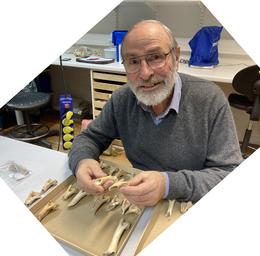
Contrairement à une idée largement répandue, la domestication des animaux ne résulte pas d’une volonté délibérée des humains pour répondre à leurs besoins. Elle est le fruit d’un processus lent, complexe, étalé sur des siècles, marqué par une intensification progressive des interactions écologiques et culturelles entre humains et non-humains. Ce processus s’inscrit dans le vaste mouvement d’anthropisation de la planète.
En rendant accessibles les résultats des recherches bioarchéologiques les plus récentes, l’auteur raconte comment les humains et les non-humains de la Préhistoire ont inventé, sans en avoir conscience, une forme inédite de société commune, pour le meilleur ou pour le pire. Chiens et chats en sont les figures familières, cependant cette histoire concerne beaucoup d’animaux d’élevage, des bovins aux lamas et des chevaux aux poulets, sans oublier des poissons et des insectes.
Mais aujourd’hui, face aux défis écologiques, économiques, sanitaires, éthiques et politiques du XXIe siècle, quel est le devenir de cette relation ? Ce récit nous plonge dans le monde de la science, qui avance au fil des hypothèses, des réfutations et des découvertes, et nous invite à réfléchir à notre responsabilité envers ces compagnons qui partagent notre histoire.