


Summary
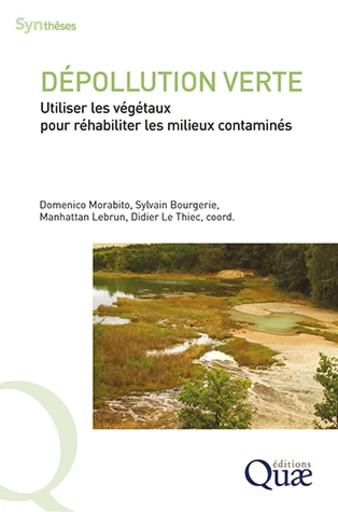
Soil, air, and water pollution, resulting from industrialization and population growth, affects physical, chemical, and biological balances and impacts health, biodiversity, and ecosystem services. The consequences of this pollution are manifold: global climate change, a significant loss of soil ecological functions, and degradation of the quality and availability of water resources, among others.
Numerous international research projects and initiatives have contributed, establishing an accurate assessment of these contaminants and developing solutions aimed at limiting their effects. Through clear concepts, rigorous analytical methods, and case studies, this book presents solutions based on ecological approaches to meet these environmental challenges. It highlights alternative techniques to conventional solutions, combining environmental efficiency and sustainability. Scientific and technological advances in green remediation are presented, along with various remediation processes, such as phytoremediation and phytomanagement, and sustainable solutions aligned with current environmental policies.
Intended for students and professionals, this book offers a comprehensive and detailed overview of the management and remediation of contaminated sites.
Table of contents
Introduction
Part I. State of pollution and opportunities for biological remediation
Chapter 1. Sources and evolution of pollution: air, soil, water, and the concept of phytoremediation.
Didier Le Thiec, Jean-Louis Morel
Identification of major sources of pollution
Effects of this pollution on the environment
Remediation, phytoremediation, and nature-based solutions
Chapter 2. Biological remediation of polluted compartments: methods and applications
Sylvain Bourgerie, Domenico Morabito, Manhattan Lebrun
Phytoremediation
Bioremediation
Factors influencing the success of biological remediation
Advantages and limitations of biological remediation
Part II. Biological decontamination of air, water, and effluents
Chapter 3. Capture of atmospheric pollutants by crops: mechanisms and consequences
Jean-François Castell
Mechanisms of transfer and capture
Use of crops for air pollution control
Chapter 4. Potential and limitations of air pollution mitigation by urban green structures
Juliette Leymarie, Jean-François Castell
Potential for air pollution control at the small urban area and urban park scales
Specific effects: small green areas, spatial organization, isolated trees
Plant traits influencing pollutant capture
Capacity of green structures for air pollution control
Chapter 5. Landscaping to reduce the transfer of agricultural contaminants to aquatic environments
Julien Tournebize, Cédric Chaumont
Strategy for intercepting drainage water
Performance of artificial wetlands for nitrate removal
Performance of artificial wetlands for pesticide removal
Part III. Rehabilitation and recovery of polluted soils: plant and microbial approaches
Chapter 6. Pollution of mining or industrial sites and assisted phytostabilization strategies
Sylvain Bourgerie, Domenico Morabito, Manhattan Lebrun
Plant mechanisms influencing the mobility of trace elements (TEs)
Amendments as stabilizers of TEs
Microbial mechanisms involved
Chapter 7. Soil pollution by hydrocarbons, microbial biodegradation, and the role of plants
Aurélie Cébron, Thierry Beguiristain, Marc Crampon, Marie-Paule Norini, Pierre Leglize
Microbial metabolisms involved in hydrocarbon biodegradation and their use in bioremediation
Role of plants in hydrocarbon dynamics
Optimization of phytoremediation
Challenges of in situ phytoremediation
Chapter 8. Phytomanagement: a nature-based solution for rehabilitating contaminated soil
Yoann Boisson, Lisa Ciadamidaro, Michel Chalot
Phytomanagement strategies for rehabilitating soil contaminated with trace elements
Microorganism-assisted phytoremediation
Economic valorization of the biomass produced
Chapter 9. Phytomanagement for managing soil pollution in agricultural and urban contexts
Thierry Lebeau
Sources of soil contamination in rural and urban environments
Management strategies for polluted soils
Application of phytomanagement to agricultural soils
Chapter 10. Harvesting metals with agromining
Jean-Louis Morel, Marie-Odile Simonnot, Yetao Tang, Guillaume Echevarria, Wenshen Liu, Baptiste Laubie
What is agromining?
Nickel agromining
Rare-earth element agromining
Part IV. Economic feasibility and social acceptability of remediation strategies
Chapter 11. The difficult economics of soil remediation
Xavier Galiégue
Soil remediation: assessing damage
Soil remediation: what remediation action?
What remediation criteria? The complex interplay among stakeholders
Chapter 12. Social barriers to the introduction of phytomanagement
Valérié Bert, Hervé Flanquart
What is social acceptability?
How acceptable are phytotechnologies?
How acceptable is phytomass from phytotechnologies?
General conclusion
List of abbreviations
List of authors