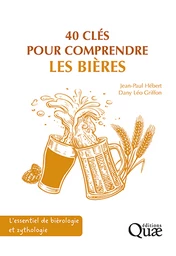



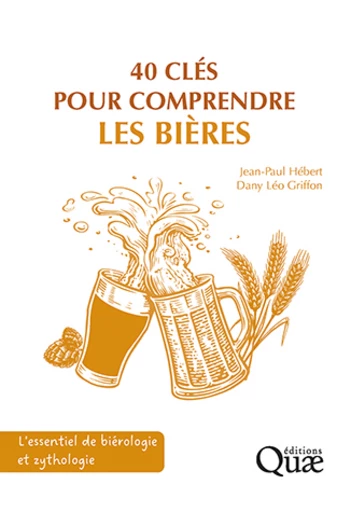
40 keys to understanding beer

The essentials of beerology and zythology

by Jean-Paul Hébert (writer), Dany Léo Griffon (writer)
Collection: Quae en poche
january 2026
Référencer ce produit sur votre site

Summary

Do all beers foam? How do you make banana beer? What is the difference between beerology and zythology?

From the earliest archaeological discoveries to the surge in craft beer, this book offers an overview of the history of beer across cultures and continents. Made from starch-rich plants, beer has always accompanied the rise of our civilizations and remains deeply embedded in our daily lives today. Every year, industrial breweries produce nearly two billion hectoliters of beer—97.5% of global production—while, at the same time, craft breweries are booming in Western countries: around 2,500 in France alone! And elsewhere in the world? Humans have always transformed sorghum, millet, corn, and rice into nourishing beverages: African dolos, Latin American chichas, Asian sake, and many others.

If you want to impress your friends and discover the surprising facets of this ancient and universal beverage, come explore the secrets of beer production and tasting through 40 questions. Enrich your “beer culture” with original, science-based insights.

Because “beer is liquid friendship” (R. Coutteure, actor and beer poet from northern France), this book is “to be enjoyed without moderation.”

Table of contents

Foreword

Beer: an ancient history

1. Who invented beer?
2. Was cervoise a form of beer?
3. How do you define beer and craft beer?
4. Where does beer gets its color from?
5. What is a pilsner or a lager?
6. What is a stout or an ale?
7. Why are IPAs so popular?
8. What are the differences between Trappist beers and abbey beers?
9. What is a Christmas beer, a March beer, or a seasonal beer?
10. Is non-alcoholic beer really alcohol-free?
11. Are there beers that stand out from the ordinary?
12. How can you find your way through all these beers?

Beer: biotechnology and expertise

13. Does water quality affect beer quality?
14. What is beer made from?
15. What is malt?
16. What is the brewer's gold?
17. What is the role of brewer's yeast?
18. What is hot-side brewing?
19. What is cold-side brewing?
20. What are top- and bottom-fermented beers?
21. What are gueuze, lambic, faro, and brett beers?
22. What steps turni barley grain into a pint of beer?
23. What role do dolos play in African societies?
24. How do you make banana beer?
25. Why does munkoyo production interest biotechnologists?
26. Why are there so many chichas in Latin America?
27. How is sake consumed in Japan?

Beer: a social lubricant

28. Do you speak beerology?
29. What is the difference between beerology and zythology?
30. Why is the star the emblem of brewers?
31. What contributions have brewers made to science?
32. What role did Pasteur play in brewing?
33. What are the virtues of beer?
34. What is the nutritional value of beer?
35. What role does alcohol play in beer?
36. How can you travel around the world in 80 beers?
37. How should beer be served?
38. Do all beers foam?
39. How should beer be tasted?
40. Does beer have any gastronomic value?

For more information

Image credits

Press

More contents

Ce titre est adapté du livre Toutes les bières moussent-elles ? paru chez Quæ en 2010, dans la collection Clés pour comprendre et récompensé par plusieurs prix littéraires : prix du livre Spirit 2021, prix Gourmand Awards 2020 - "Best in the world".
Features

Language(s): French

Publisher: Éditions Quae

Edition: 1st edition

Collection: Quae en poche

Published: 22 january 2026

Reference Book: 03041

Reference eBook [PDF]: 03041NUM

Reference eBook [ePub]: 03041EPB

EAN13 Book: 9782759241590

EAN13 eBook [PDF]: 9782759241606

EAN13 eBook [ePub]: 9782759241613

Interior: Black & white

Format (in mm) Book: 140 x 205

Pages count Book: 84

Pages count eBook [PDF]: 84

Weight (in grammes): 110

Size: 4.47 MB (PDF), 1.82 MB (ePub)

Vidéo