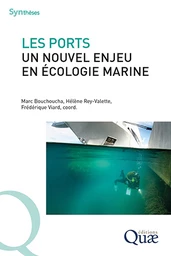



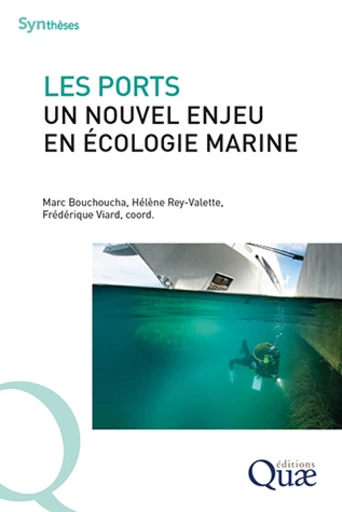
Ports: a new frontier in marine ecology

by Marc Bouchoucha (editorial coordination), Hélène Rey-Valette (editorial coordination), Frédérique Viard (editorial coordination)
Collection: Synthèses
december 2025
Référencer ce produit sur votre site

Summary

Ports play a central economic, social, and geopolitical role, particularly through international trade. In light of growing environmental concerns, they are emerging as key elements in decarbonisation and pollution control policies. Ports are also home to unique marine ecosystems that are relatively unknown.
This book explores the characteristics of marine habitats in ports, the ecological roles of ships, and the specific ecological and evolutionary dynamics of marine communities in ports. Particular attention is paid to non-native species, introduced by maritime activities, that are characteristic of these environments. The authors examine practical solutions to minimize ports’ impact on natural marine ecosystems, such as developing appropriate observation tools, ecological engineering, and leveraging port governance and user involvement.
This book is aimed at students, marine and environmental science researchers, port management stakeholders, and curious readers. It offers a unique exploration of marine habitats in ports. It contributes to the emerging field of urban marine ecology, a discipline that draws on a broader vision of ecology to study the complex interactions between the dynamics of natural systems and those of human societies.

Table of contents

General introduction. Why a book on port ecosystems?

Frédérique Viard, Hélène Rey-Valette, Marc Bouchoucha
Ports, witnesses to the evolution of human societies
The turning point in the call for sustainable development
Ports, at the heart of urban marine ecology
Purpose and organization of the book

Chapter 1. Specific characteristics of marine habitats in ports

Lucille Sevaux, Elliot Dreujou, Julie Carrière, Marc Bouchoucha
Port diversity
Physico-chemical characteristics of port areas
Non-indigenous species: important contributors to port biodiversity
In conclusion

Chapter 2. Beyond the docks: from globalization to biological invasions

Amélia Curd, Éric Foulquier
How ships connect the world
Maritimization and globalisation
Ships as floating habitats
Hubs
Ballast
Biofouling
The fight against biofouling
In conclusion

Chapter 3. Diversity, structure, and functioning of port ecosystems

Jean Charles Leclerc, Robin Gauff
Influence of the port habitat on ecological flows
Influence of the environment on interactions between species
Stability of port ecosystems: non-indigenous species as disruptive factors
Profile of port biodiversity: limited diversity and marked homogeneity?
In conclusion

Chapter 4. Ports: a melting pot of human-induced change

Frédérique Viard, Céline Reisser
Ports: unique environmentsconducive to the evolution of specific adaptations
Adaptive responses: from plasticity to genetic adaptations
Acclimatizing to port conditions
Ports as witnesses of contemporary adaptive evolution
Ports: a melting pot enabling genetic mixing and hybridization
In conclusion

Chapter 5. Methods and techniques for observing marine port ecosystems

Marie-Pierre Halm-Lemeille, Cécile Massé, Florence Menet, Audrey Bruneau
Environmental monitoring in port areas
Tools for monitoring and observation in port environments
Contribution of participatory and citizen science
In conclusion

Chapter 6. Ecological engineering in port areas

Marc Bouchoucha, Sylvain Pioch
Ports: a major pressure on marine ecosystems
Ecological engineering and restoration: the concepts
What kind of ecological engineering in port areas?
Successes and limitations of ecological engineering in port areas
Ecological engineering in port areas: a tool for compensation in the marine environment?
In conclusion

Chapter 7. Marine biodiversity: regulating uses and raising user awareness

Hélène Rey Valette, Florence Menet, Cécile Massé, Éric Foulquier, Coraline Jabouin
The “impact regulation” dimension
Incentives, awareness-raising, and dissemination of best practices
In conclusion

Chapter 8. Regulating non-indigenous species and conserving port biodiversity through good practices

Hélène Rey-Valette, Éric Foulquier, Lucille Sevaux
Perceptions of ports and awareness of environmental impacts
Impacts on non-indigenous species as a function of port size and type
Environmental impacts associated with user practices
In conclusion

General conclusion

Frédérique Viard, Hélène Rey-Valette, Marc Bouchoucha

Bibliography

Glossary

List of abbreviations

List of authors

Image credits

Press

More contents

Urban Ecology Knowledge, Challenges and Opportunities for Urban Biodiversity

Book 34,00 €

Green remediation Using plants to rehabilitate contaminated environments

Book 22,00 €

Study changes in eating habits Interdisciplinary approaches, methods, and ethical issues

Book 36,00 €

Biological Highways in the Sky The dispersal of microorganisms, insects and other small life forms via the atmosphere

Book 35,00 €

Invasion and expansion of forest insect pests What are the risks for French forests in the context of global change?

Book 30,00 €

Mycotoxins Current knowledge and future challenges

Book 35,00 €

Features

Language(s): French

Publisher: Éditions Quae

Edition: 1st edition

Collection: Synthèses

Published: 4 december 2025

Reference Book: 03023

Reference eBook [PDF]: 03023NUM

Reference eBook [ePub]: 03023EPB

EAN13 Book: 9782759241750

EAN13 eBook [PDF]: 9782759241767

EAN13 eBook [ePub]: 9782759241774

DOI eBook [PDF] : 10.35690/978-2-7592-4176-7

Interior: Colour

Format (in mm) Book: 160 x 240

Pages count Book: 184

Pages count eBook [PDF]: 184

Weight (in grammes): 430

Size: 5.03 MB (PDF), 4.58 MB (ePub)

Vidéo