



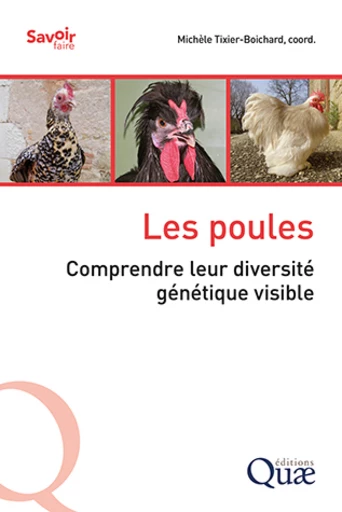
Les poules
Comprendre leur diversité génétique visible
Référencer ce produit sur votre site
Pour intégrer sur votre site, un lien avec le visuel et le titre de ce produit :
Les poules
utilisez le code HTML suivant :
ou dirigez votre internaute sur ce lien :
Déjà affilié ? Connectez-vous pour bénéficier de votre code HTML avec identifiant personnel.
Vous souhaitez devenir affilié ? Contactez-nous.



Livre papier 29,00 €
Livre papier 29,00 €


Livre papier 30,00 €

Livre papier 36,00 €
Pierre Jean Silvie, Bernard Papierok
Livre papier 25,00 €


Livre papier 30,00 €

Livre papier 35,00 € 21,00 € (-40%)


Livre papier 25,00 €

Livre papier 20,00 €
Livre papier 32,00 €

Revue 28,00 €

Livre papier 25,00 €

Livre papier 30,00 €

Livre papier 38,00 €
Caractéristiques
Langue(s) : Français
Éditeur : Éditions Quae
Édition : 1re édition
Collection : Savoir faire
Publication : 13 mars 2025
Référence Livre papier : 02997
Référence eBook [PDF] : 02997NUM
Référence eBook [ePub] : 02997EPB
EAN13 Livre papier : 9782759240388
EAN13 eBook [PDF] : 9782759240395
EAN13 eBook [ePub] : 9782759240401
DOI eBook [PDF] : 10.35690/978-2-7592-4039-5
Intérieur : Couleur
Format (en mm) Livre papier : 160 x 240
Nombre de pages Livre papier : 168
Nombre de pages eBook [PDF] : 168
Poids (en grammes) : 393
Taille(s) : 21,6 Mo (PDF), 24,6 Mo (ePub)