


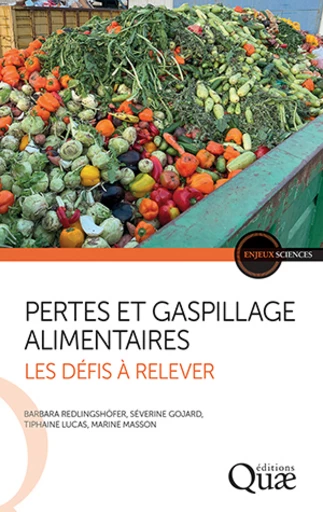
The Challenges Ahead

by Barbara Redlingshöfer (writer), Séverine Gojard (writer), Tiphaine Lucas (writer), Marine Masson (writer)
Collection: Enjeux sciences
october 2026
Référencer ce produit sur votre site

Summary

Reducing food loss and waste has become a major challenge, but how best to address the issue remains a matter of debate.

Drawing on a multidisciplinary approach, this book analyzes the mechanisms that lead to food loss and waste and examines possible ways of reducing them in light of the tensions between health, financial, organizational, and environmental concerns. It traces the emergence of the concept of food waste in Western societies during the twentieth century and provides definitions of the term.

The conditions under which food losses arise along supply chains, and food waste at the stages of distribution and consumption, are examined, along with the gradual development of public policies and regulatory frameworks designed to address them. The book also explores the challenges of preventing food loss and waste or valorizing them, conflicting interests and priorities among stakeholders, and the unintended consequences that certain solutions may entail.

From agricultural production to consumption, the book offers avenues for reflection on the challenges that must be addressed in order to support the transformation of food systems toward greater sufficiency, sustainability, and inclusiveness.

Table of contents

Acknowledgements

Foreword by Sophie Nicklaus

Why a book on food loss and waste?

The origins of contemporary food waste

Combating waste during periods of scarcity
A society of (over)consumption and (over)production
Taking social inequalities and environmental concerns into account

What are we talking about?

Definitions of food waste
Key figures on food waste: trends and measurement

Food loss: from agricultural production to processing

Losses at the production stage
Losses at the processing stage

Food waste: from distribution to consumption

Food waste in the retail sector
The food service sector and itscharacteristics
Food waste at home

Policies for reducing food loss and waste

Legislation and taxation: supporting food donation and setting reduction targets
Mobilizing and raising awareness among stakeholders
A territorial approach through the commitment of local institutions
Action priorities for reducing food waste

Preventing food loss and waste by reducing volumes

Raising awareness of food waste and its impact: everyone’s responsibility?
Buying less, buying better
Optimizing storage and use of food products
Reducing surplus through better management
Marking down
Reprocessing

Managing surplus and discarded food to feed people

Donation and sale
Processing surplus food into new food products

When food leaves the chain directed to human consumption

Animal feed within interconnected food supply chains
Valorization in other industries
Composting and anaerobic digestion: recovering value from food waste

Complexities surrounding reducing food loss and waste and avenues for reflection

A field-based approach to complement measurement and monitoring
Decisions made by some, waste generated by others
Weighing up costs and benefits
The hidden effects on sustainability
Alternatives that are, unfortunately, easier and more visible than source reduction

Key takeaways

General bibliography

Image credits

Crédits iconographiques

Press

Presse Agence - Le 27 septembre 2026
"Le livre ne se contente pas de dresser un constat ; il explore en profondeur les origines du gaspillage dans les sociétés occidentales au cours du 20ème siècle et en clarifie les définitions."
>> Lire l'article

More contents

Features

Language(s): French

Publisher: Éditions Quae

Collection: Enjeux sciences

Published: 15 october 2026

Reference Book: 03080

Reference eBook: 03080NUM

EAN13 Book: 9782759243341

EAN13 eBook: 9782759243358

Interior: Colour

Format (in mm) Book: 120 x 190

Pages count Book: 124

Pages count eBook: 124

Weight (in grammes): 140

Vidéo